
Democracy Is Indigenous - What’s on the Ballot?
By Trey Roberts
Our friends at the National Urban Indian Family Coalition (NUIFC) write, “Today, of the 9.6m Native Americans living in the U.S., more than 78% live off of reservations and lack a collective national voice. Native people residing in urban areas are amongst the most invisibilized populations in the nation, yet we represent a majority portion of Native people in the United States: Of the 78% residing off reservation - 68% of all American Indian/Alaska Natives (AI/AN), and 78% of all AI/AN children live in cities.”
While many of our members across North Carolina come from smaller Native communities, Triangle Native American Society works to recreate the sense of belonging and cultural connection people experience within their home tribal communities.
As we head into the mid-term election, an important election where Congress is on the line and in Raleigh, smaller local elections are on the ballot, we have to use our collective voice to support the Native vote to heard and seen.
“This invisibility has created and perpetuates extreme disparities across all the major sectors of life and community for tribal citizens living in cities including children and family services, housing and homelessness, economic development and employment, and health and wellness. Deficient socio-economic indicators are all related to and solvable through policy engagement and ensuring that Native voices are reflected in policy discussions that stem from showing up and impacting elections.'“ - NUIFC
Mid-term elections for some may not feel like the “not-to-miss” event as general Presidential elections, but the impacts made during mid-terms hit hard in policies that can affect you right at home.
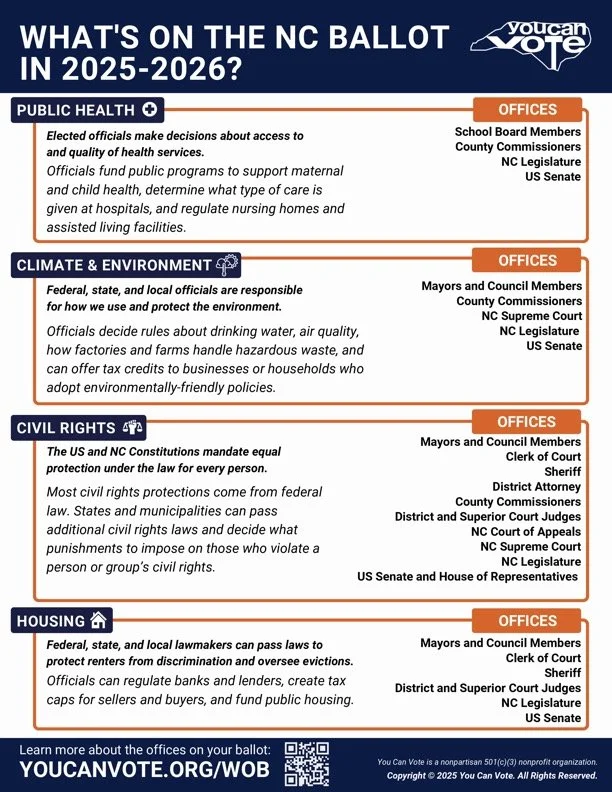
What’s on the Ballot Infographic by You Can Vote
There’s an emphasis on our part to spread information to not only members in our service area, but to equip you to start healthy conversations back home. Voter turn out for these important elections average lower than Presidential elections. In the above infographic provided by You Can Vote, you can see all the important issues that are missed when you don’t vote in the mid-term.
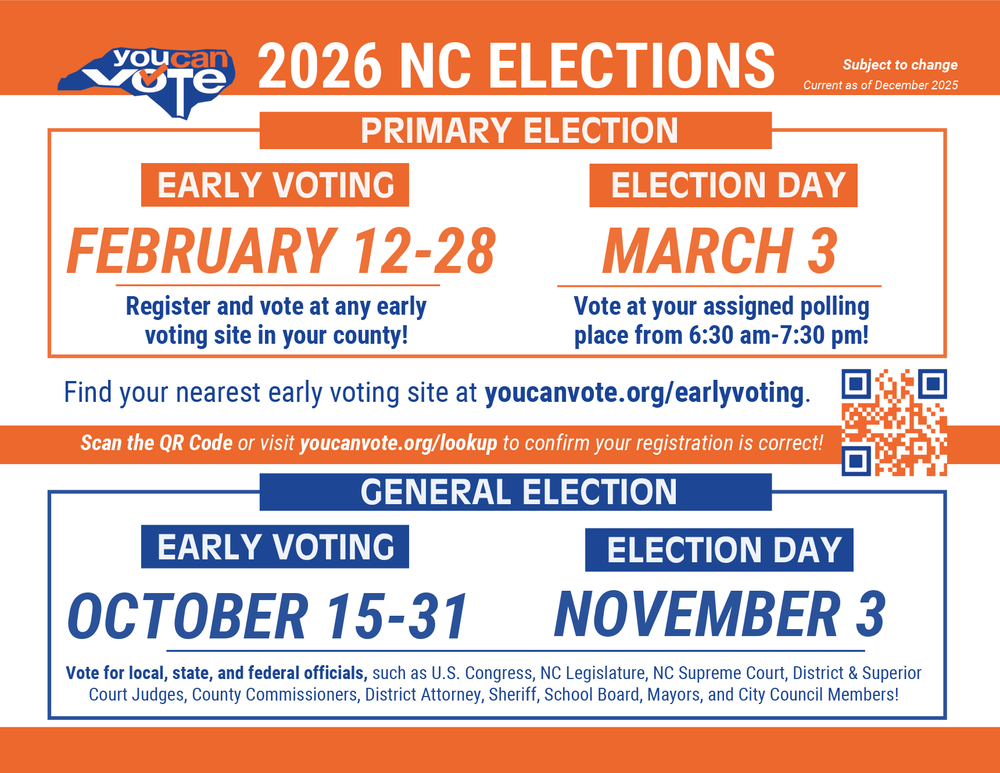
Important dates to remember:
Primary Election:
Early Voting - February 12th-28th
Election Day - March 3rd
General Election:
Early Voting - October 15th-31st
General Election - November 3rd